5 Point method
THE FORMULA TO GETting DRESSED
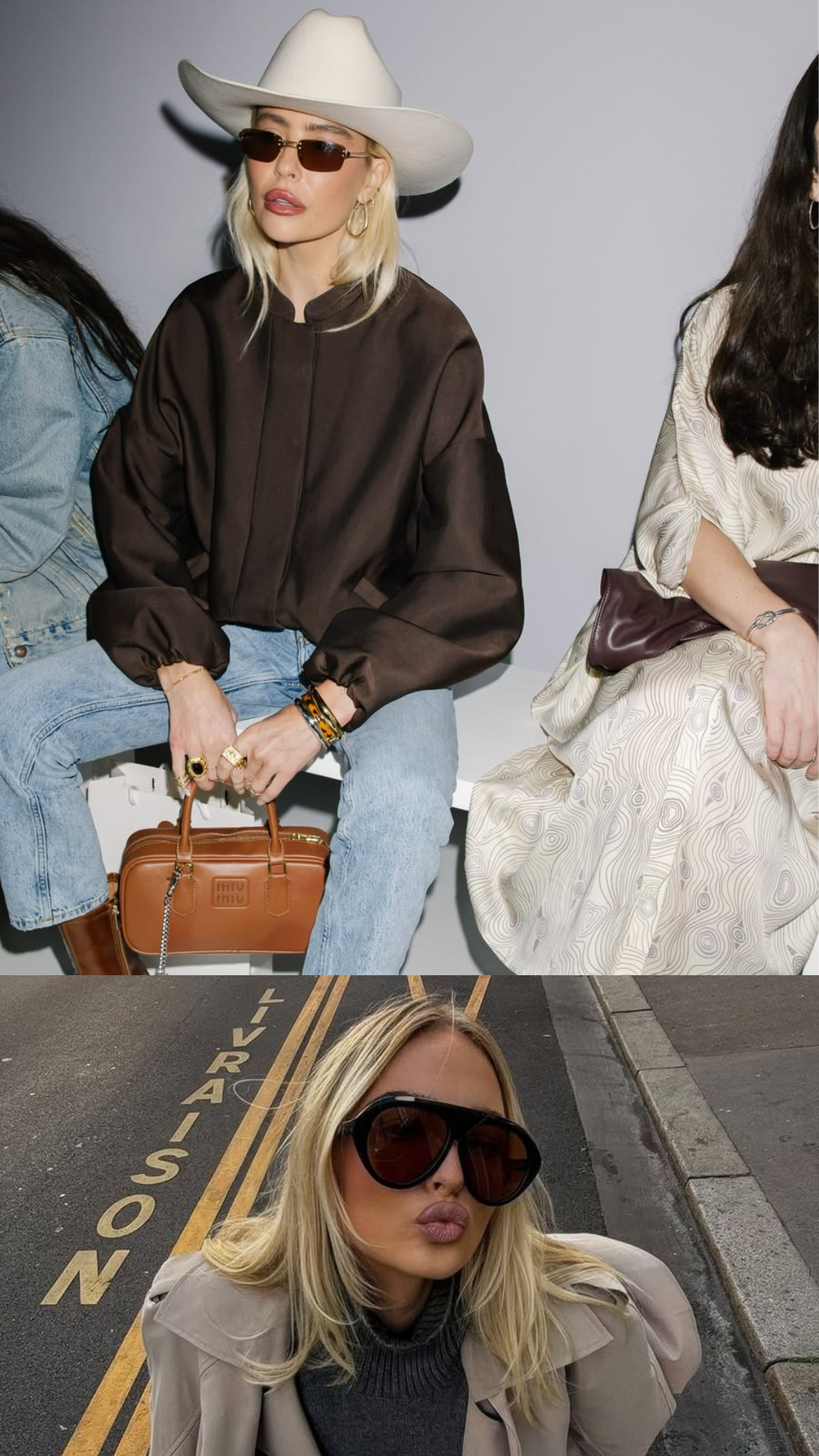
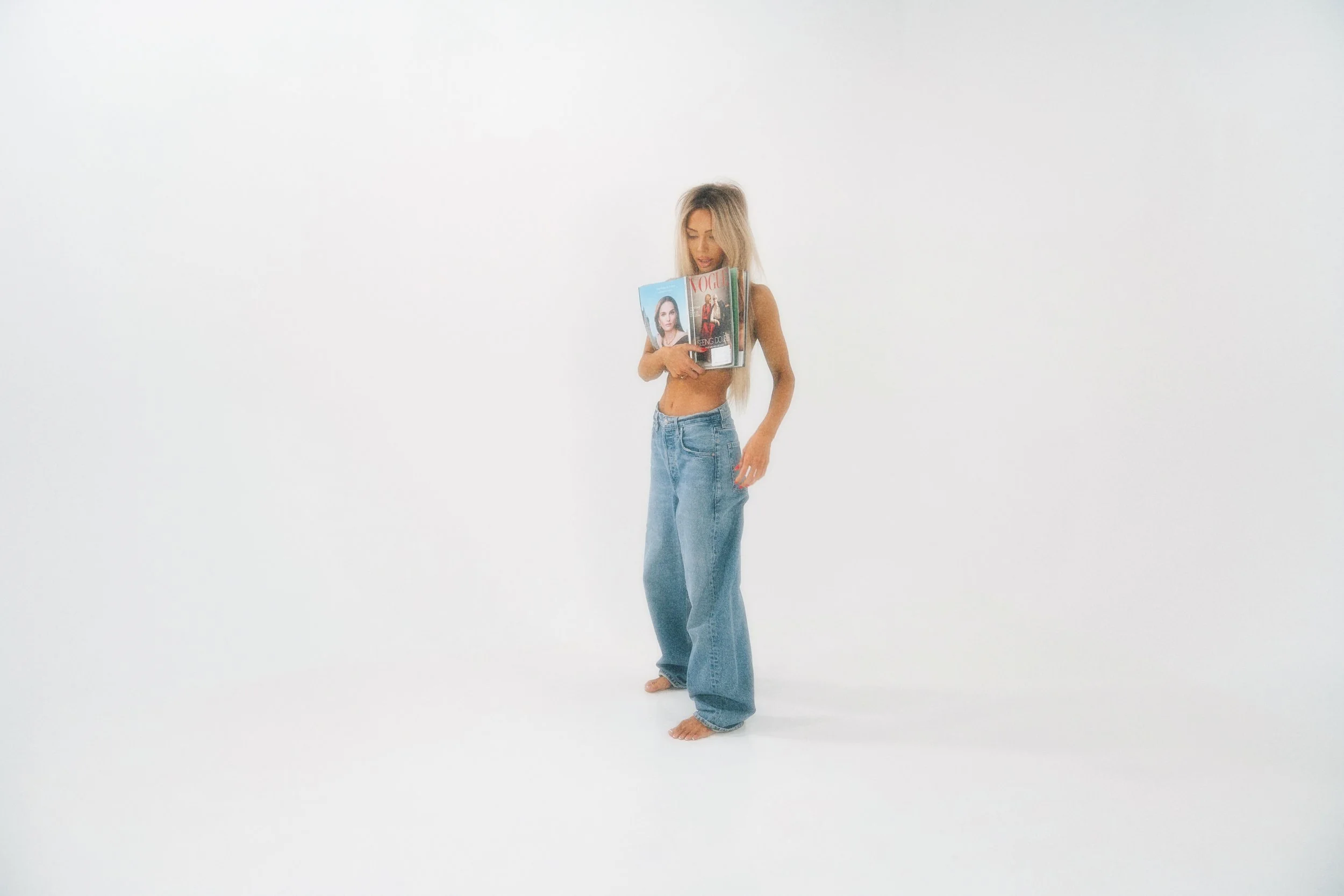
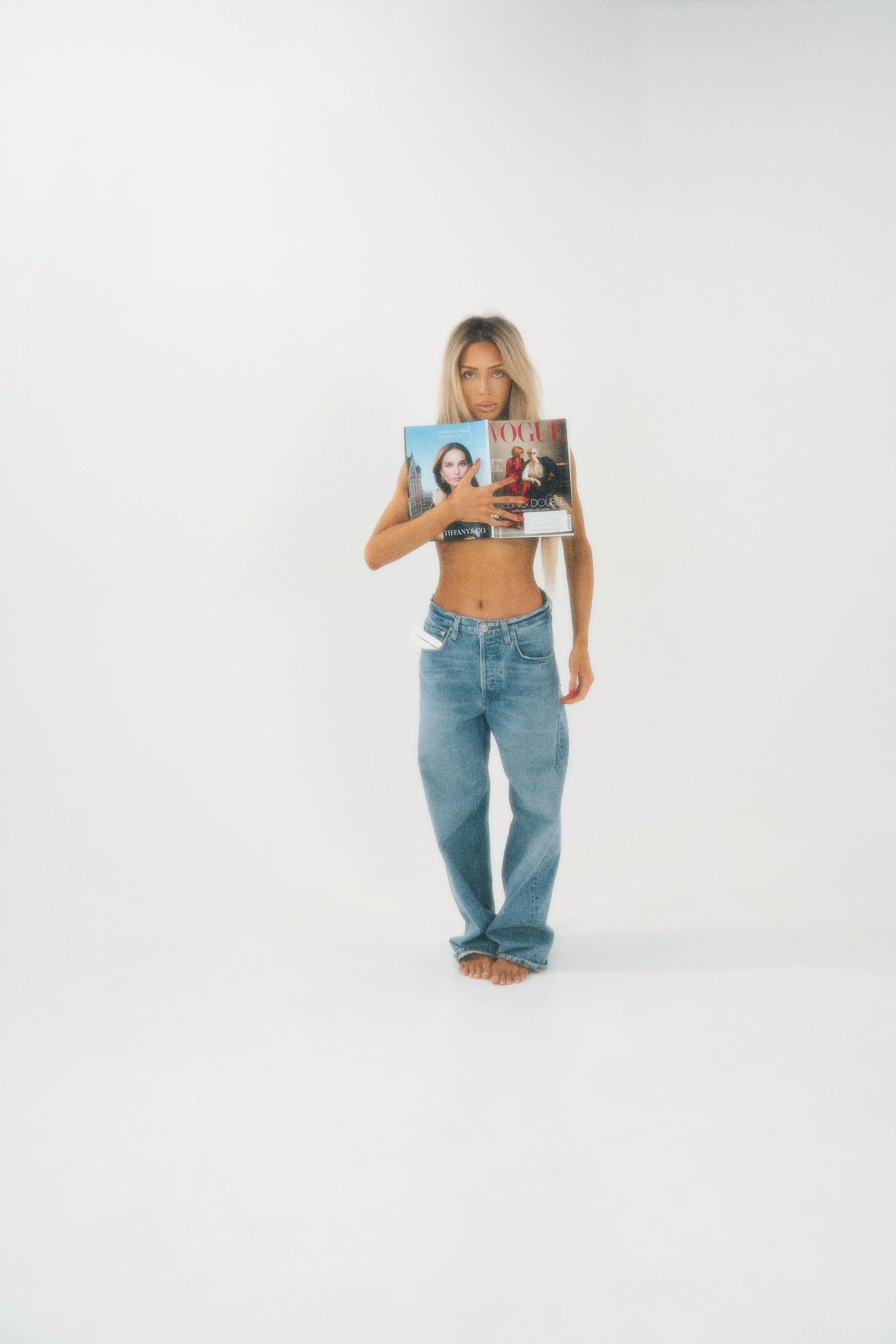
5PM was born in the middle of the night during a season of consecutive breakups. Girl friends. Boyfriends. A contrived way of living. My closet. Shoes that omit a sharp pointed toe. Sugar. Borrowed confidence. I cleared house. I hated all modern fashion trends and their calculated price tags. It was exhausting seeing the same 6 dresses from big online retailers circulate with a perfected blowout. But it was far more exhausting avoiding the mirror in the clothes I was squeezing into to fit a character I relentlessly pursued for years. I found that oversized, men's clothing possessed every advantage. But the kind that was worn and lived in; not from this generation. It was a men's size 17L sport coat with excess shoulder padding and a pair of 2002 vintage Levi's, size 32, that changed the trajectory of my life. So I got to work. I thrifted hundreds of potential pieces, ordered a pair of fabric scissors, threw away every hyper-feminine silhouette in my closet, and reconstructed men's clothes to my aesthetic. Most people thought this was nonsensical. Until it wasn't. I found myself on the kitchen floor with tailors chalk and an old leveler I used to draw straight lines, every spare minute I had. How can I give reason to the way I dress? I wanted a mathematical formula and resolute certainty. 1 masculine. 1 feminine. 1 oversized. 1 jewelry. 1 accessory.
01 | Masculine
STRUCTURE.
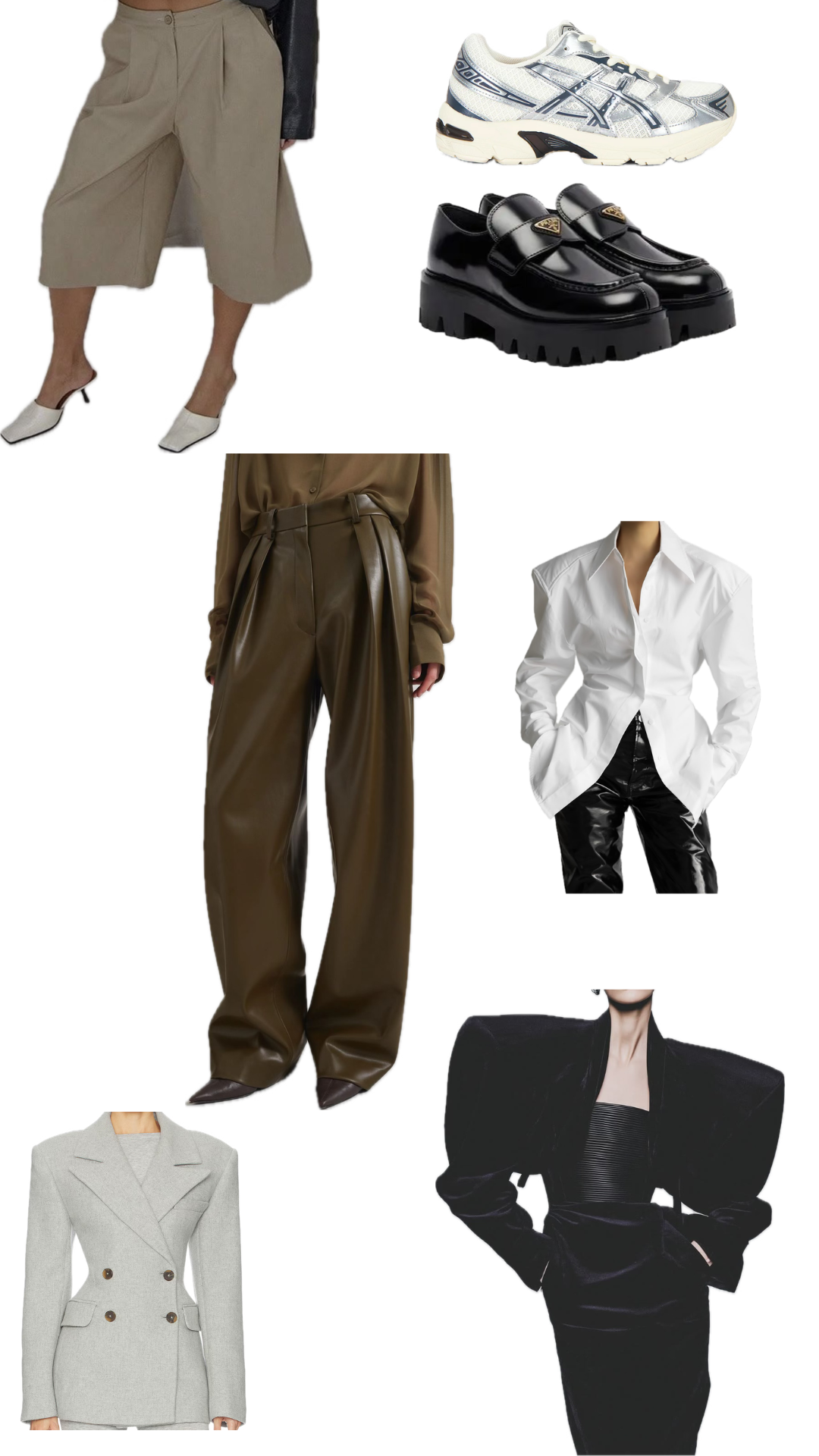
Your masculine piece gives structure.
The eye naturally looks for clean lines and defined shapes first. Structure creates a visual starting point and gives the body more presence.
Examples
Blazer
Tailored trouser
Button-down
Structured jacket
Loafers
Dad sneakers
Structured handbag
02 | Feminine
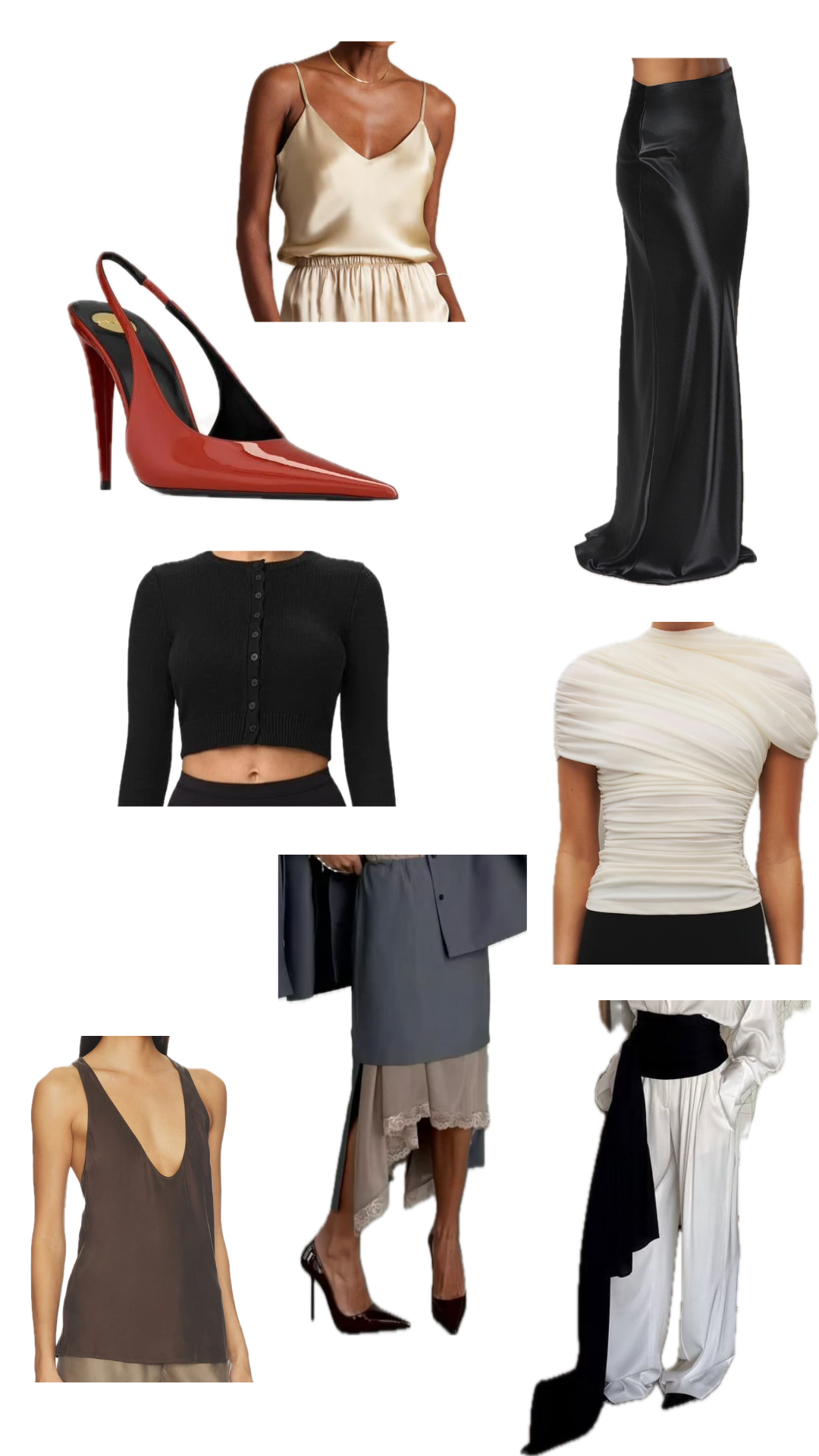
FLOW.
Your feminine adds movement, reducing rigidity.
After finding structure, the eye follows movement. Soft fabrics and feminine silhouettes keep the eye traveling naturally instead of stopping at one hard shape.
Examples
Silk
Draped tops
Tank tops
Slip skirts
Pointed heels
Soft knitwear
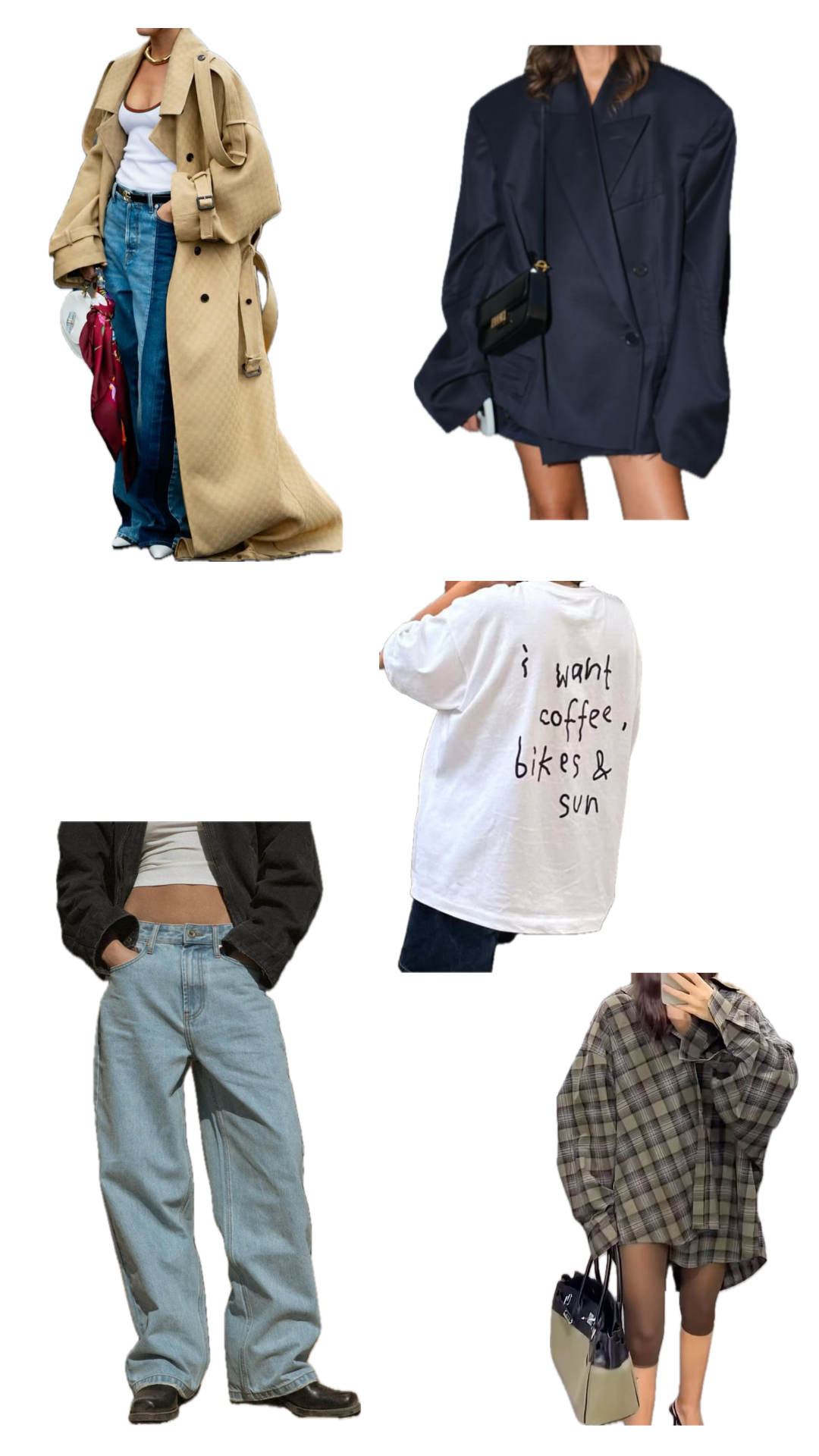
03 | Oversized
CONTRAST & INTRIGUE.
Your oversize piece creates depth and gives dimension.
The oversized pieces break visual predictability. That contrast keeps the eye engaged as it moves through the outfit.
Examples
Oversized blazer
Wide-leg jeans
Oversized tee
Relaxed trench
Chunky knit
Oversized button-down
04 | Jewelry
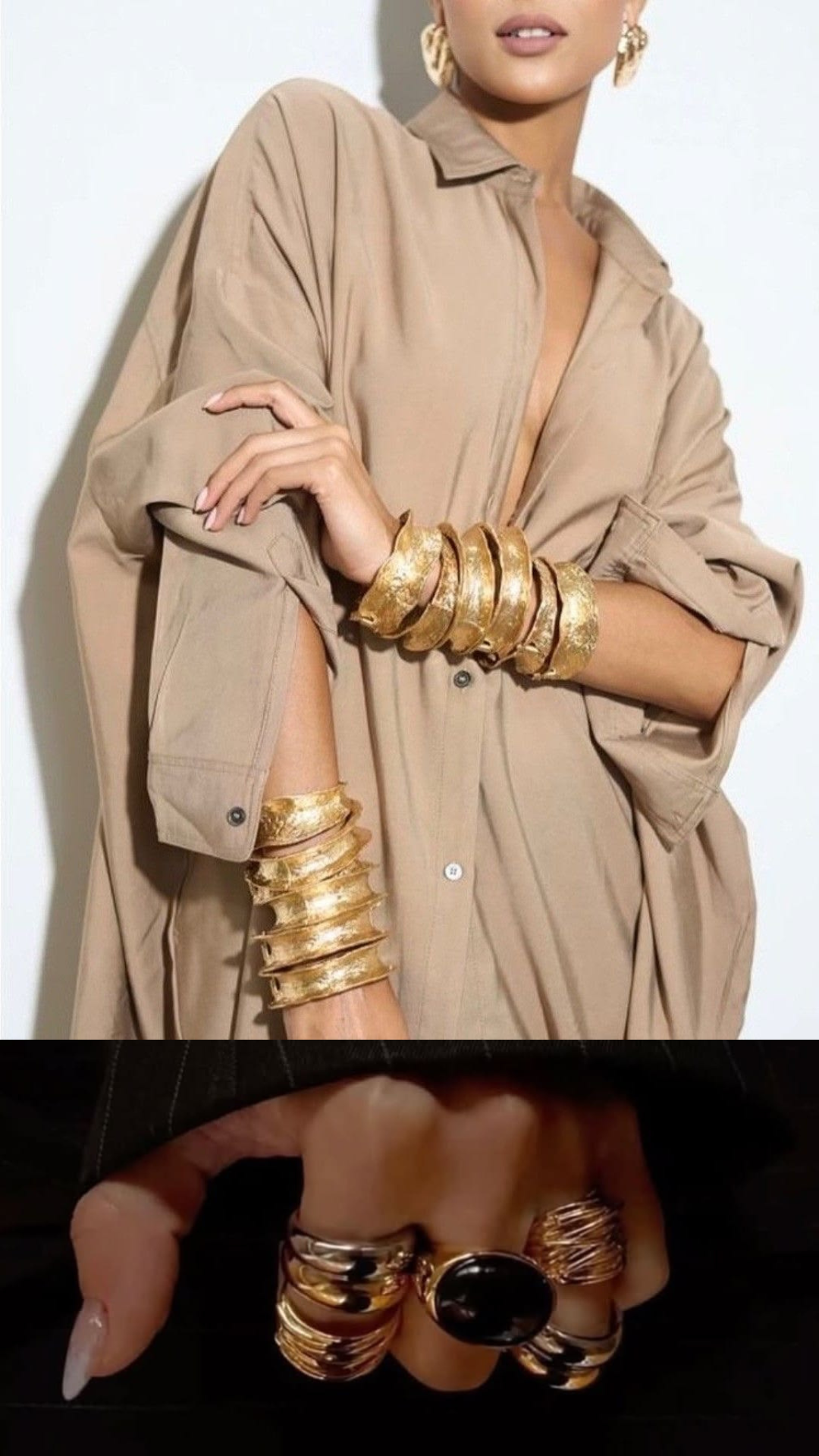
LANGUAGE.
Your jewelry acts as a visual cue, influencing how the outfit is perceived.
Examples
Chunky vs. dainty
Gold vs. silver
Minimal vs. layered
Matte vs. polished
Organic vs. geometric
Classic vs. statement
05 | Non-Jewelry Accessory
CLOSING THE LOOP.
Your final accessory cannot be jewelry.
The brain naturally seeks closure. A finishing piece closes the visual loop, making the outfit feel complete.
Examples
Handbag
Belt
Sunglasses
Baseball cap
Scarf
Statement shoes
Tote bag
Trench coat
Hair accessory
Tie
Pocket square
Socks